This post was created with help from AI tools and carefully reviewed by a human (Muntaseer Rahman) . For more on how we use AI on this site, check out our Editorial Policy.
Check Out These FREE Tools We Made JUST For You!
Why Did My African Dwarf Frog Die? 10 Causes & Prevention Tips

You walked up to your tank this morning and there it was – your little frog floating at the top, completely still. That gut-punch feeling hits hard, doesn’t it?
I’ve been there. African Dwarf Frogs can go from seemingly healthy to dead faster than you’d think possible, and it leaves you standing there wondering what the heck went wrong.
The truth is, these tiny aquatic frogs are tougher than they look but also way more sensitive than most fish. They’re like that friend who seems fine but is actually stressed about everything – except instead of complaining, they just… die.
Let’s figure out what might have happened to your frog and how to prevent it from happening again.
Are African Dwarf Frogs Actually Hard to Keep Alive?
Here’s the deal: they’re not impossible, but they’re definitely not “throw them in a tank and forget about them” pets either.
African Dwarf Frogs sit somewhere in the middle of the difficulty scale. They’re fully aquatic (meaning they never leave the water), which sounds easy until you realize they’re insanely picky about water quality. Like, way pickier than most fish.
The good news? Once you nail down the water conditions, they’re pretty straightforward. No misting, no basking lights, no complicated substrate changes like with other amphibians.
But that water quality thing? That’s where most people screw up.
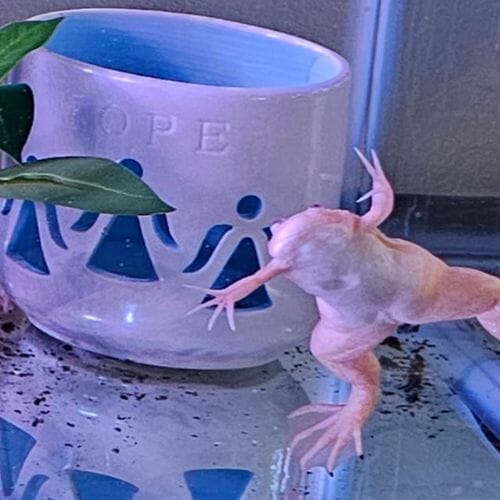
The 10 Main Reasons Your African Dwarf Frog Died
1. They Were Already Sick When You Bought Them
This one sucks because there’s literally nothing you could have done.
Sometimes your frog was doomed from the start. Pet stores get these guys shipped from who-knows-where, and they travel through multiple suppliers before landing in that tank at PetSmart.
If your new frog died within a few days or weeks of bringing it home, there’s a good chance it was already carrying disease or just too stressed from the journey. The chytrid fungus is especially common in pet trade frogs, and it has a 2-month incubation period – meaning your frog could have been infected long before you bought it.
What you can do: Always quarantine new frogs for at least 4-6 weeks before adding them to your main tank. I know it’s a pain, but one sick frog can wipe out your entire collection.
2. Poor Acclimation (The Most Common Rookie Mistake)
Did you dump your frog straight from the bag into your tank?
Yeah, that’s basically shock therapy for amphibians.
African Dwarf Frogs breathe through their skin, which means sudden changes in water chemistry hit them like a freight train. Going from the pet store’s water to your water in 30 seconds can straight-up kill them.
What you can do: Float the bag in your tank for 15-20 minutes to match temperatures. Then, over the next 30-60 minutes, gradually add small amounts of your tank water to the bag. Slow and steady wins the race here.
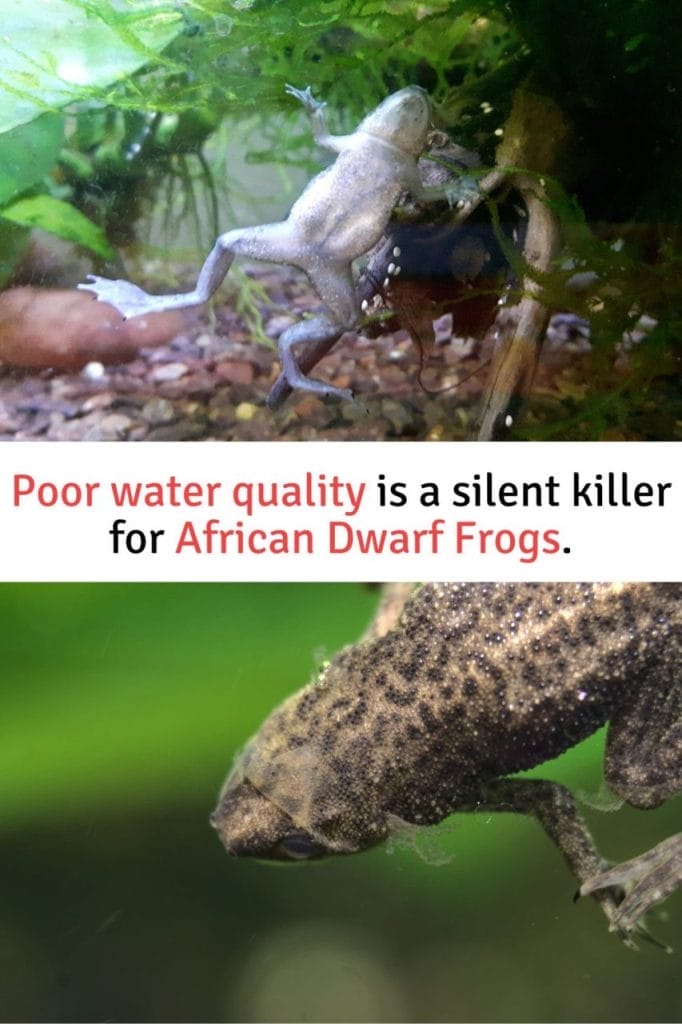
3. High Ammonia or Nitrite Levels (The Silent Killer)
If there’s one thing that kills more African Dwarf Frogs than anything else, it’s bad water.
Your ammonia and nitrite levels need to be at 0 ppm. Not “pretty close to zero.” Not “the pet store said it was fine.” Actual zero.
Because frogs breathe through their skin, dissolved toxins in the water go straight into their bloodstream. It’s like forcing them to breathe toxic gas 24/7. Fish can tolerate a little bit of ammonia spike for a while. Frogs? Not so much.
What you can do: Get yourself a liquid test kit (not those useless strips). Test your water at least weekly. If you see any ammonia or nitrites, do immediate water changes until it’s zero. Your tank needs to be properly cycled before you add frogs – that takes about 4-6 weeks.
4. They Tried to Escape (And Succeeded)
African Dwarf Frogs are surprisingly good jumpers for aquatic animals.
When your frog starts trying to escape, it’s basically waving a giant red flag that says “SOMETHING IS WRONG WITH THIS WATER.” They usually attempt the great escape when toxin levels are high or they’re stressed.
Problem is, these frogs can only survive out of water for about 10 minutes max before their delicate skin dries out and they die.
What you can do: Always use a tight-fitting lid on your tank. Check your water parameters if you notice escape attempts – it’s usually their way of saying the water quality is terrible.
5. Incompatible Tank Mates (Size Matters)
African Dwarf Frogs are the gentle giants of the aquarium world, except they’re not giants – they’re tiny and defenseless.
They have no teeth, no claws, and they’re slow as molasses. Putting them with aggressive fish is like throwing a kindergartner into an MMA cage.
I’ve seen forum posts where people’s frogs literally got swallowed whole by larger fish. Not a fun discovery.
Even non-aggressive fish can be a problem because ADFs are so slow at finding food. By the time your frog realizes there’s a bloodworm floating by, your betta has already eaten it, burped, and taken a nap.
What you can do: Only keep them with peaceful, similarly-sized tank mates. Bettas can work but watch carefully. Consider a species-only tank if you want to play it safe. Target-feed your frogs with a turkey baster or feeding tongs so they actually get food.
6. Wrong Diet (Yes, You Can Literally Love Them to Death)
Here’s where things get tricky: African Dwarf Frogs will eat themselves to death if you let them.
Seriously. These guys have zero self-control when it comes to food.
Feeding bloodworms every day? That’s the frog equivalent of eating McDonald’s for every meal. Bloodworms are super fatty and will cause bloat, which can kill your frog. Plus, overfeeding causes obesity that literally weighs them down until they can’t swim properly.
On the flip side, some owners feed them fish food thinking “they’re in a fish tank, so fish food is fine.” Wrong. Frogs need a high-protein, carnivorous diet.
What you can do: Feed adult frogs 3 times per week (not daily – this is important!). Mix it up: frozen bloodworms, brine shrimp, mysis shrimp, and frog pellets. Remove uneaten food after 30 minutes. Consider fasting them for 1-2 days per week to prevent bloat.
7. Wrong Filter Selection (The Sucky Situation)
Strong filters can literally kill your frog in two ways.
First, baby frogs can get sucked right into the intake. Second, even if they don’t get sucked in, a strong current exhausts them because they’re weak swimmers.
But here’s the catch: you NEED good filtration because frogs are messy eaters and produce a lot of waste. It’s a balancing act.
What you can do: Choose a gentle filter with adjustable flow. Sponge filters work great for frog tanks. Add a pre-filter sponge over any intake to prevent accidental suction incidents. Aim for 3-5x tank volume per hour turnover – strong enough to clean but gentle enough that your frog isn’t fighting a current all day.
8. Poor Handling (Just Don’t Touch Them)
Your hands are covered in oils, soaps, lotions, and all sorts of chemicals.
When you pick up your frog, all that stuff gets absorbed directly through their porous skin. It’s like forcing them to eat whatever’s on your hands.
Plus, their bones are delicate. Rough handling can cause broken ribs or internal injuries that kill them slowly.
What you can do: Simple – don’t handle them unless absolutely necessary. If you must, use a soft net or a clean container. Never grab them with bare hands. They’re not puppies; they’re look-don’t-touch pets.
9. Diseases (The Ones That Should Terrify You)
African Dwarf Frogs can catch some truly nasty diseases.
Chytrid Fungus (The Big One)
This is the amphibian equivalent of the plague. Chytridiomycosis has wiped out about 30% of amphibian species worldwide and it’s terrifyingly common in the pet trade.
Symptoms: Loose, shedding skin that looks shredded (not the normal clean peeling), loss of appetite, lethargy, trying to escape water constantly, sudden weight loss, pale skin that doesn’t return to normal.
The fungus attacks the keratin in their skin, which messes up their ability to breathe and disrupts their nervous system. Without treatment, it’s a death sentence.
Treatment: If caught early, Lamisil AT spray (terbinafine hydrochloride 1%) works through daily 5-minute dips. Some people also use benzalkonium chloride baths (2 mg/liter every 3 days for 6 treatments). Raising tank temperature to 82-86°F (28-30°C) can slow the fungus growth since it’s temperature-sensitive.
Fungal Infections
White, cottony patches on the skin, especially on feet and hands.
Usually a secondary infection after an injury or stress. Think of it as the frog’s immune system giving up.
Red-Leg Syndrome
Your frog’s legs, feet, and hands turn red. It’s caused by bacteria (Aeromonas hydrophila) or various fungi, usually when the tank isn’t properly cycled.
Dropsy (Bloat)
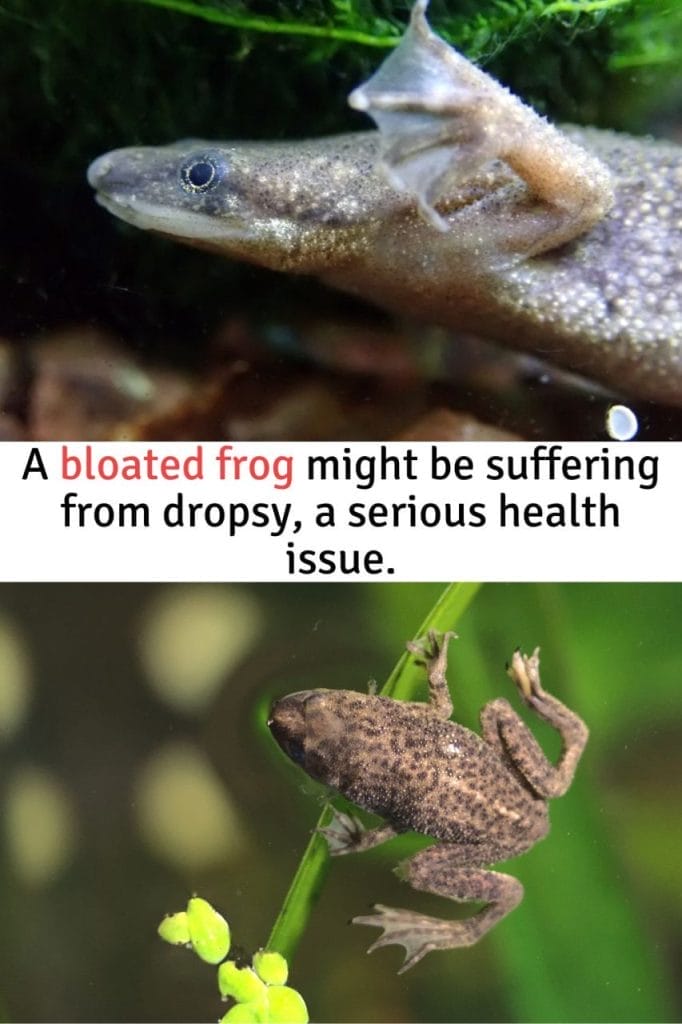
Severe bloating that makes your frog look like a balloon. Usually caused by eating gravel, sand, or hard substances that block up their digestive system. Can also be from overfeeding fatty foods like bloodworms.
If not treated quickly, the frog can’t move properly and will die.
What you can do: Maintain pristine water conditions (your best defense), quarantine new frogs, inspect frogs daily for early warning signs, remove sharp decorations that could cause injuries. If you see symptoms, isolate the sick frog immediately and start treatment.
10. Old Age (The One You Can’t Prevent)
Sometimes your frog just lived its life.
African Dwarf Frogs typically live 5-7 years with proper care. Some make it longer, some don’t quite get there.
If your frog was with you for several years and slowly declined rather than suddenly dying, old age was probably the culprit. It sucks, but it’s the natural order of things.
What you can do: Nothing. Give them the best life possible while they’re here.
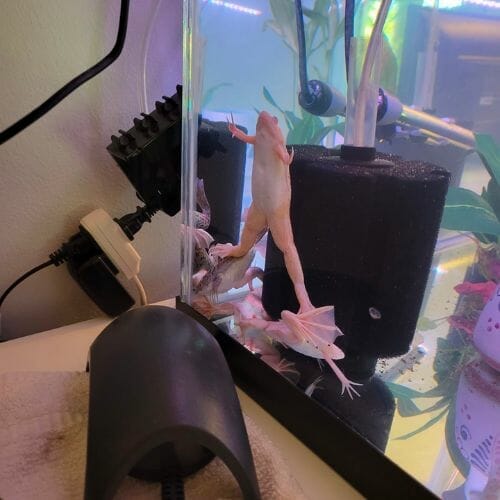
How Do I Know If My African Dwarf Frog Is Dying?
Watch for these red flags:
- Pale skin that stays pale (not just shedding)
- Lethargy – just sitting there like a lump
- Loss of appetite when they used to eat like crazy
- Bruises, cuts, or bleeding on the skin
- Excessive shedding that looks shredded and tattered (not the clean peeling of healthy shedding)
- Cloudy or gloomy eyes
- Difficulty swimming or floating sideways
- Constantly trying to climb out or staying at the surface all day
- Floating belly-up without movement (this is usually the end)
If you see any combination of these, test your water immediately and consider quarantining the frog for treatment.

Do African Dwarf Frogs Play Dead?
Yes, and it’s honestly hilarious when you realize they’re just being dramatic.
Sometimes your frog will float motionless at the top of the tank, and you’ll have a mini heart attack thinking it’s dead. Then suddenly it kicks and swims away like nothing happened.
They’re not actually playing dead on purpose – they’re just lazy and sometimes chill at the surface in weird positions. It’s normal idle behavior when they’re in a sluggish mood.
The difference? A truly dead frog won’t suddenly start swimming when you tap the tank.
Why Do My Frogs Keep Dying? (The Harsh Truth)
If you’ve lost multiple frogs, there’s a systemic problem with your setup.
Go through this checklist:
- Is your tank cycled? If not, you’re basically keeping your frogs in a toilet. Complete a full nitrogen cycle (4-6 weeks) before adding frogs.
- Are you acclimating properly? Slow drip acclimation over 30-60 minutes is mandatory.
- Is your tank overstocked? A 10-gallon tank should have no more than 3-4 frogs. More than that and you’re asking for ammonia spikes.
- Water parameters perfect? Get a liquid test kit and verify: Ammonia 0 ppm, Nitrite 0 ppm, Nitrate 5-25 ppm, pH 6.5-7.5, Temperature 72-78°F (22-26°C).
- Are you overfeeding? Adult frogs only need food 3x per week, not daily.
- Do you have a secure lid? Escape attempts usually mean water quality issues.
- Are your tank mates compatible? Remove aggressive fish immediately.
One pattern I’ve noticed from forums: people who keep losing frogs usually have uncycled tanks or are following bad advice from pet store employees who just want to make a sale.
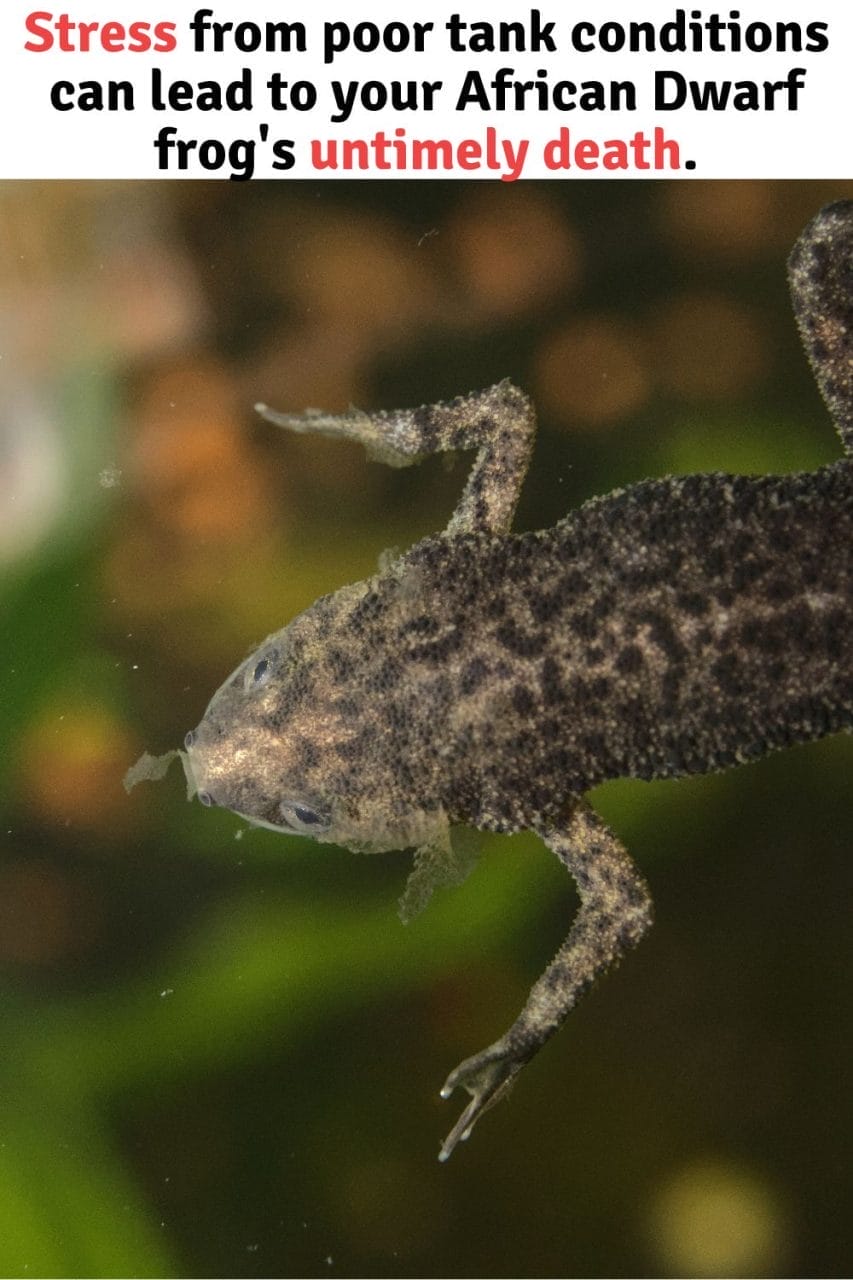
How to Prevent Early Death (The Complete Checklist)
Choose Healthy Frogs from the Start
Look for active frogs with clear skin, bright eyes, and good body weight. Avoid frogs that look pale, lethargic, or have any white patches.
Ask the store if they’ve screened for chytrid fungus. If they look at you like you’re speaking Klingon, go to a different store.
Set Up the Tank Properly BEFORE You Get Frogs
- Minimum 5 gallons for 1-2 frogs, 10+ gallons for 3-4 frogs
- Secure, tight-fitting lid (no gaps!)
- Gentle filter with adjustable flow
- Remove sharp decorations that could injure them
- Complete nitrogen cycle before adding frogs (4-6 weeks)
- Temperature 72-78°F (22-26°C) with a reliable heater
Acclimate Slowly and Carefully
Float the bag for 15-20 minutes to match temperature. Then over the next 30-60 minutes, gradually add your tank water to the bag in small amounts. This is non-negotiable.
Maintain Perfect Water Conditions
Test weekly (or more often if you’re new to this):
- Ammonia: 0 ppm
- Nitrite: 0 ppm
- Nitrate: 5-25 ppm
- pH: 6.5-7.5
- KH: 4-15
- GH: 5-10
Change 10-20% of water weekly if you have a filter. If no filter, you need way more frequent changes (not recommended).
Feed Properly (Quality Over Quantity)
Adult frogs: 3 times per week Baby frogs: Daily feeding
Variety is key: frozen bloodworms, brine shrimp, mysis shrimp, frog pellets. Remove uneaten food after 30 minutes.
Consider fasting 1-2 days per week to prevent bloat.
Choose Compatible Tank Mates
Best options: other African Dwarf Frogs, peaceful community fish of similar size (some tetras, corydoras, small peaceful fish). Maybe bettas if you monitor carefully.
Avoid: aggressive cichlids, large fish, anything that might eat a small frog, overly active fish that will stress them out.
Quarantine New Frogs
Always quarantine new frogs for 4-6 weeks in a separate tank before adding them to your main tank. This prevents introducing diseases like chytrid that can wipe out your entire collection.
Regular Maintenance Without Chemicals
Clean decorations and tank regularly, but never use soap or detergent. These chemicals absorb through frog skin and kill them.
Use hot water only or diluted hydrogen peroxide for cleaning. Rinse thoroughly.
Monitor Daily
Spend 2 minutes each day just watching your frogs. You’ll quickly learn their normal behavior, and you’ll catch problems early when they’re still treatable.
The Bottom Line
African Dwarf Frogs aren’t impossible to keep alive, but they punish carelessness faster than most aquarium pets.
The vast majority of ADF deaths come down to water quality issues (especially in uncycled tanks), poor acclimation, and overfeeding. Get those three things right and you’re already ahead of 80% of people who struggle with these frogs.
If you lost a frog, don’t beat yourself up too much. Learn from it, adjust your setup, and try again if you’re willing to put in the effort.
These weird little underwater frogs can live 5-7 years and bring a lot of joy if you give them what they need. They’re just not going to forgive you for cutting corners on water quality.
Your frog deserved better, and now you know how to do better next time.
About Author
Hello, I’m Muntaseer Rahman, the owner of AcuarioPets.com. I’m passionate about aquarium pets like shrimps, snails, crabs, and crayfish. I’ve created this website to share my expertise and help you provide better care for these amazing pets.
Disclaimer
This site is owned and operated by Muntaseer Rahman. AcuarioPets.com is a participant in the Amazon Services LLC Associates Program, an affiliate advertising program designed to provide a means for sites to earn advertising fees by advertising and linking to Amazon.com. This site also participates in other affiliate programs and is compensated for referring traffic and business to these companies.